Tetbury is one of those Cotswold towns that rewards slow looking. At first glance, visitors may be drawn to its handsome stone buildings, independent shops, antique dealers and royal connections. But pause for a little longer, step away from the main street, and you begin to notice the details that tell a much older story.
One of the best examples is Chipping Steps — a wonderfully atmospheric medieval flight of cobbled steps that feels almost hidden in plain sight. For many visitors, it is easy to miss. For those exploring with someone who knows the town, however, it becomes one of Tetbury’s most evocative historic corners.
The steps once formed an old entrance into the town, linking lower routes with the high ground above. Today, they are bordered by a row of old weavers’ cottages, their Cotswold stone walls hinting at Tetbury’s long association with the wool trade. It is a place where the past feels unusually close: uneven cobbles underfoot, narrow cottages rising beside you, and the sense that generations of traders, labourers, craftsmen and townspeople have climbed this same route before.
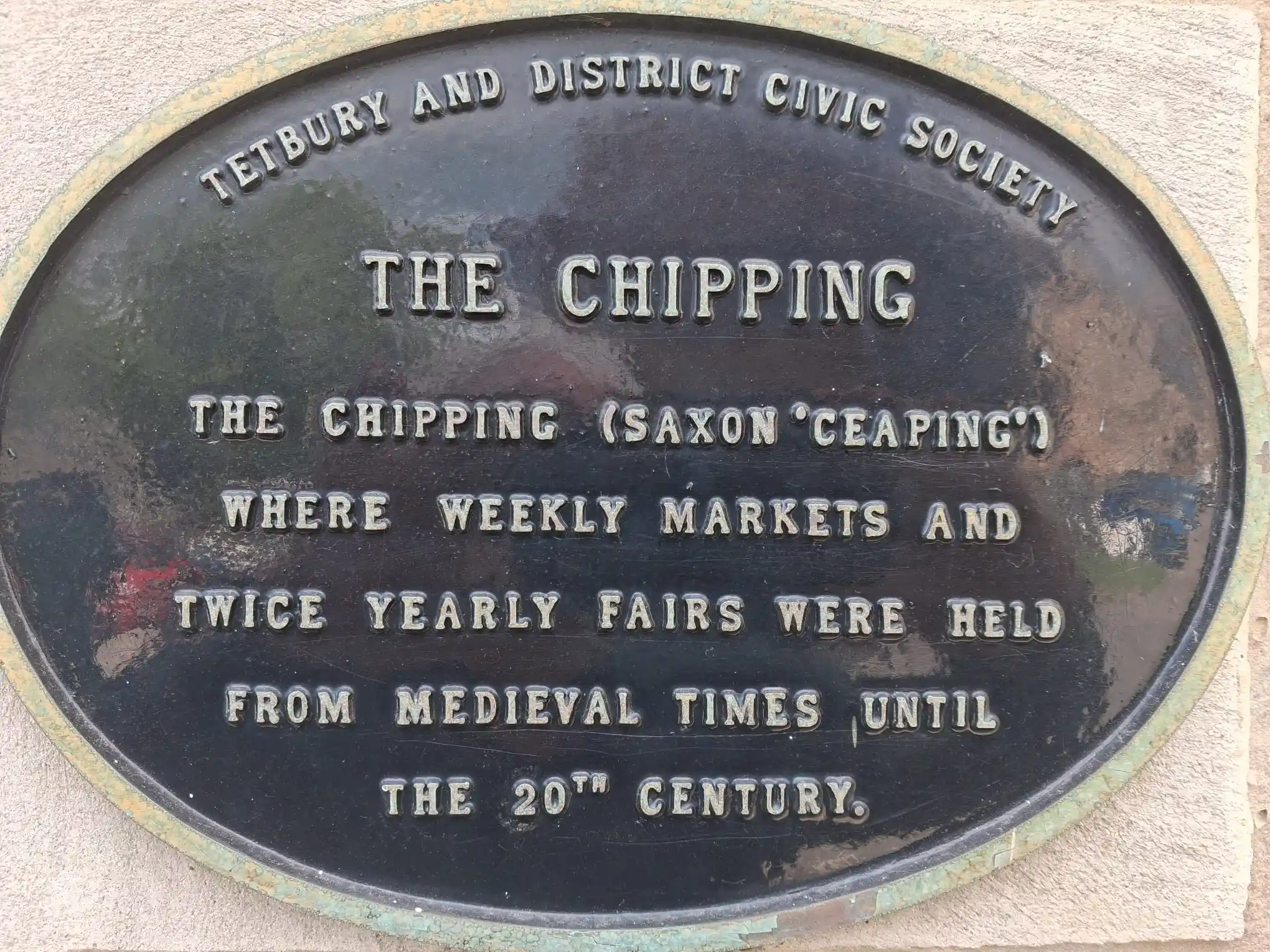
At the top of the steps lies The Chipping, Tetbury’s old market place. The name itself comes from the Old English ceaping, meaning market, and the plaque on The Chipping records its long-standing role as the place where weekly markets and twice-yearly fairs were held from medieval times until the 20th century.
These were not simply places to buy and sell goods. In rural communities, markets and fairs were part of the social and economic life of the town. They brought people in from surrounding farms, villages and estates, creating a lively gathering point where news was exchanged, deals were struck and work could be found.
Among the most fascinating traditions associated with The Chipping were the Hiring Fairs, also known as Mop Fairs. These events saw agricultural labourers, domestic servants and skilled workers arrive in town to offer their services for hire, often for a fixed term. The “mop” name is thought to come from the objects some workers carried to show their trade: a shepherd might hold a crook, a maid a mop, a labourer a tool of his craft.
For farming families and estate owners, these fairs were an opportunity to find workers. For labourers, they could mean a new place of employment, a new master, and sometimes a new life in a different village or parish. It is easy to imagine The Chipping filled with people, animals, stalls, noise and negotiation — a very different scene from the quiet, attractive square visitors encounter today.
Tetbury’s wool-town heritage adds another layer to this story. With over 1,300 years of history, the town grew in importance through its connections with sheep farming, wool, weaving and trade. The old weavers’ cottages beside Chipping Steps are a reminder that Tetbury’s beauty was shaped not only by wealth and architecture, but by work: by hands spinning, weaving, carrying, trading and building.
This is what makes Tetbury such a rewarding destination for curious travellers. Its history is not confined to a museum or a single landmark. It is built into the gradients of the streets, the names of places, the worn stone, the market spaces and the surviving buildings. Chipping Steps may not be the grandest sight in the town, but it is one of the most revealing.
It also captures exactly why a local guide can transform a visit. Without context, you might see a charming old set of steps and take a photograph. With the story, you begin to see an entrance to a medieval town, the homes of weavers, the rise of the wool trade, and the bustle of markets and Mop Fairs that shaped everyday life for centuries.
Tetbury is often described as an ancient wool town, but places like Chipping Steps help bring that description to life. They show how history survives not only in famous buildings, but in the quieter corners — the ones you might walk past unless someone points them out.
For visitors exploring the Cotswolds, Tetbury offers more than picturesque streets and elegant architecture. It offers the chance to uncover the hidden workings of an old market town: a place of trade, labour, tradition and community, where even a short climb up a cobbled set of steps can open a doorway into the past.