The Cotswolds is one of England’s most beautiful regions, famous for honey-coloured stone villages, rolling countryside, traditional pubs and centuries of history. Yet one question is asked more than almost any other:
Can you visit the Cotswolds without a car?
Yes. Thousands of visitors do exactly that every year by taking a direct train from London Paddington to Moreton-in-Marsh, Kingham or Kemble. The challenge isn’t reaching the Cotswolds—it’s travelling between the villages once you arrive.
That’s where local knowledge makes the difference.
While it is perfectly possible to reach the Cotswolds by train from London, Birmingham, Oxford and many other cities, exploring once you arrive can be much more challenging. The region covers almost 800 square miles, public transport is limited outside the main towns, and many of the prettiest villages have no railway station at all.
Fortunately, there is a better way.
By combining rail travel with a knowledgeable local private guide, you can enjoy the best of the Cotswolds without driving, worrying about parking, or trying to coordinate infrequent country buses.
This guide explains exactly how to do it.
Who is this guide for?”
Something like:
This guide is ideal if:
✓ You’re visiting from London
✓ You don’t want to hire a car
✓ You’re travelling as a couple
✓ You’re visiting for one day
✓ You’re arriving on a cruise
✓ You’re staying in Oxford
✓ You’re staying in Bath

Can You Visit the Cotswolds Without a Car?
 Absolutely.
Thousands of visitors arrive by train every year, particularly from London Paddington.
The challenge isn’t getting to the Cotswolds.
It’s seeing the places you’ve travelled all that way to visit.
Many of the iconic villages—including Bibury, Lower Slaughter, Upper Slaughter and Snowshill—have no railway station. Others have very limited bus services, especially on Sundays and during the winter months.
Without careful planning it’s surprisingly easy to spend more time waiting for buses than actually enjoying the countryside.
Why the Cotswolds Is Different
Unlike cities, the Cotswolds isn’t one destination.
It’s a collection of historic market towns, tiny villages and beautiful countryside spread across Gloucestershire, Oxfordshire, Warwickshire, Worcestershire and Wiltshire.
Some villages are only five miles apart—but public transport between them can involve long waits or several changes.
For example:
- Bibury has no railway station.
- Lower Slaughter has no railway station.
- Upper Slaughter has no railway station.
- Snowshill has no railway station.
- Stanton has no railway station.
- Blockley has only limited bus services.
This is why so many first-time visitors underestimate how difficult independent travel can be.
Best Train Stations for Visiting the Cotswolds
Fortunately, several railway stations provide excellent gateways into the region.
Moreton-in-Marsh
Often regarded as one of the best arrival points for visitors.
Direct trains from London Paddington take around 90 minutes, and the station sits close to many of the North Cotswolds’ best-known villages.
Ideal for visiting:
- Stow-on-the-Wold
- Bourton-on-the-Water
- Blockley
- Chipping Campden
- Broadway
- Snowshill
London Paddington → Moreton-in-Marsh – approximately 90 minutes
“One thing I often notice is visitors arriving at Moreton-in-Marsh expecting to explore on foot. They quickly discover the Cotswolds is much larger than it looks on a map. That’s why I usually begin by taking guests through villages they’d never otherwise reach.”
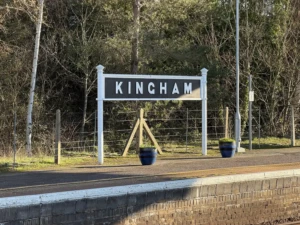 Kingham
A smaller station surrounded by beautiful countryside.
Perfect for visitors wanting a quieter arrival and easy access to villages including Daylesford, Stow-on-the-Wold and the Evenlode Valley.
London Paddington → Kingham – approximately 80 minutes
Kemble
The closest station for visitors combining the Cotswolds with a visit to Highgrove Gardens, home of King Charles III.
It also provides easy access to Tetbury and the southern Cotswolds.
London Paddington → Kemble – approximately 75 minutes
Cheltenham Spa
Ideal for visitors staying in Cheltenham or wishing to explore Regency architecture alongside traditional Cotswold villages.
Honeybourne
Useful for visitors heading towards Broadway or Chipping Campden.
Which Villages Can You Visit by Public Transport?
A handful of towns and villages are relatively easy.
These include:
- Moreton-in-Marsh
- Kingham
- Cheltenham
- Cirencester (bus connection)
- Stow-on-the-Wold (limited buses)
- Bourton-on-the-Water (limited buses)
However, some of the most picturesque villages are much harder to reach.
These include:
- Upper Slaughter
- Lower Slaughter
- Snowshill
- Stanton
- Painswick
- Blockley
- Naunton
- Guiting Power
These are often the places visitors remember most—but they’re exactly the places public transport struggles to reach.

Why Coaches Miss Some of the Best Villages
Large coach tours are an excellent introduction to the Cotswolds.
However, they have unavoidable limitations.
Many villages have:
- narrow medieval streets
- low stone bridges
- restricted parking
- conservation regulations
- no coach parking
This means large coaches often follow the same circuit between the busiest villages.
Smaller vehicles can reach many places that simply aren’t practical for larger groups.
That’s why visitors travelling privately often discover quieter villages, hidden viewpoints and scenic back roads that never appear on standard coach itineraries.
|
Option |
Cost |
Flexibility |
Hidden Villages |
Best For |
|---|---|---|---|---|
|
Train only |
£ |
Low |
No |
Independent travellers |
|
Train + Bus |
££ |
Moderate |
Limited |
Budget visitors |
|
Coach Tour |
££ |
Low |
No |
First-time visitors |
|
Train + Private Guide |
£££ |
Excellent |
Yes |
Couples, families and photographers |
Why a Local Guide Makes Such a Difference
The biggest difference isn’t the transport.
It’s the local knowledge.
A knowledgeable guide doesn’t simply drive from village to village.
They explain:
- why there are 99 yew trees in Painswick churchyard
- how wool merchants built extraordinary churches
- where Laurie Lee grew up
- the stories behind hidden alleyways
- filming locations from Father Brown, Downton Abbey and Bridgerton
- local traditions that most visitors never hear about
These are the stories that transform beautiful villages into memorable experiences.
A Typical Day Without Driving Yourself
One of the simplest ways to explore is:
08:30
Catch a direct train from London Paddington.
10:00
Meet your local guide at Moreton-in-Marsh, Kingham or Kemble station.
Morning
Visit quiet villages before they become busy.
Enjoy scenic routes impossible by public transport.
Stop for photographs whenever you wish.
Lunch
Traditional Cotswold pub chosen to suit your interests.
Afternoon
Visit famous villages alongside hidden gems.
Discover places most organised coach tours never reach.
Late Afternoon
Return comfortably to your chosen railway station.
Evening
Arrive back in London with no driving, parking or navigation to worry about.
The Hidden Advantage of Private Touring
Many visitors assume a private tour is simply more comfortable.
In reality it often means seeing considerably more.
Without being tied to bus timetables or fixed coach schedules you can:
- stop for photographs
- spend longer in favourite villages
- avoid crowds
- change plans if the weather changes
- discover places not listed in guidebooks
Every day becomes flexible.

Frequently Asked Questions
Is one day enough?
Yes.
A well-planned day with a knowledgeable guide allows you to experience many of the region’s highlights.
However, visitors with more time often enjoy staying overnight to explore at a slower pace.
Can I do the Cotswolds entirely by train?
Not really.
You can reach several towns by rail, but trains don’t connect the villages themselves.
Are buses reliable?
Some routes are good.
Others operate only a handful of times each day.
Always check current timetables before travelling.
Is a private tour expensive?
For couples, families and small groups, the cost is often surprisingly comparable with premium coach tours—particularly when flexibility, convenience and personal service are taken into account.
Which station should I choose?
For most visitors:
- Moreton-in-Marsh offers the best all-round access.
- Kingham is perfect for quieter North Cotswolds itineraries.
- Kemble works well for Highgrove Gardens and the southern Cotswolds.
- Cheltenham Spa suits visitors combining town and countryside.
|
Coming from London |
Moreton-in-Marsh |
|
Visiting Highgrove |
Kemble |
|
Staying in Oxford |
Kingham |
|
Staying in Cheltenham |
Cheltenham Spa |
|
Visiting Broadway |
Honeybourne |
|
Want hidden villages |
Moreton-in-Marsh |
Experience the Cotswolds the Easy Way
The Cotswolds rewards visitors who slow down, explore quiet lanes and take time to hear the stories behind each village.
Seeing the real Cotswolds is where local knowledge makes all the difference.
John Batchelor of Cotswolds Travel has spent years introducing visitors from around the world to the villages, landscapes and fascinating history that lie beyond the usual tourist trail. Whether you’re arriving at Moreton-in-Marsh, Kingham or Kemble, your day begins the moment you step off the train.
Instead of worrying about bus connections or missing hidden villages, you’ll spend your time discovering the authentic Cotswolds—beautiful scenery, fascinating history and unforgettable places that many visitors never experience.
If you’re planning your first visit to the Cotswolds without a car, there’s no better way to explore than with someone who knows every back road, every hidden viewpoint and every story waiting to be told.